
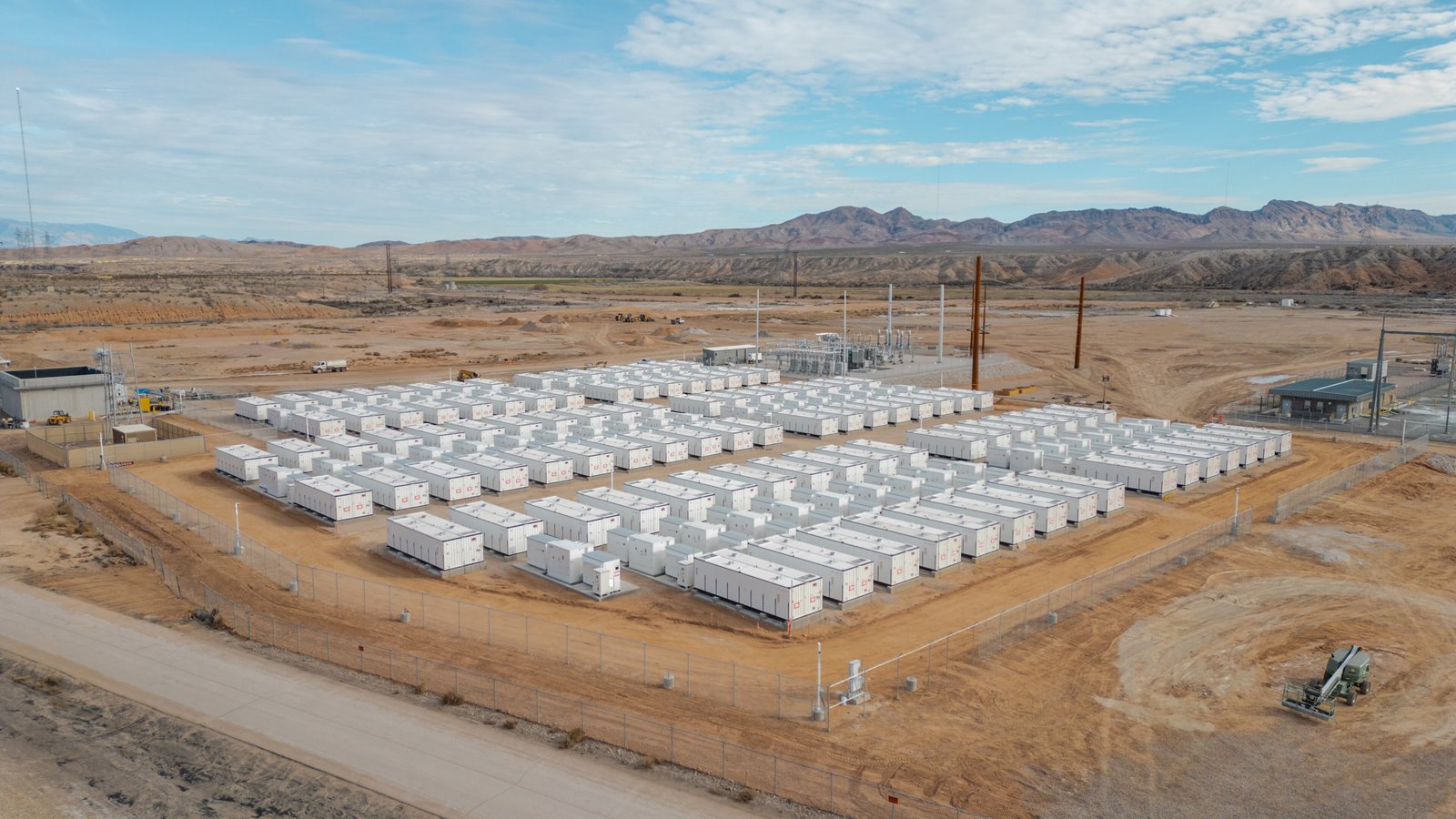
1. The opportunity: compute is now a power problem
Artificial intelligence has turned the data center into one of the fastest-growing electrical loads in the country. According to the 2024 United States Data Center Energy Usage Report1 prepared by Lawrence Berkeley National Laboratory for the Department of Energy2, U.S. data centers consumed about 176 terawatt-hours in 2023, roughly 4.4 percent of national electricity use, and are projected to consume between 325 and 580 terawatt-hours by 2028, or 6.7 to 12 percent of the total. Those figures describe annual energy. Measured instead as peak capacity, Grid Strategies3 counts roughly 90 gigawatts of data-center load forecast by 2030, while cautioning that utility forecasts are likely overstated.
The unit of demand is also growing. Grid Strategies also finds that the average proposed data-center campus rose from about 150 megawatts in 2023 to about 300 megawatts in 2024. Connecting loads of that size is slow. Lawrence Berkeley's Queued Up 2026 edition4 reports a median of 61 months from interconnection request to commercial operation. That figure measures new generation rather than new load, so it is a proxy, but it signals the scale of the queue that any large new user of the grid now faces.
2. The requirements: land, power and acceptance
A modern data-center campus needs three things that are increasingly scarce at once: large, flat, appropriately zoned parcels with buffers from residential neighbors; a firm, high-capacity electrical connection; and a community willing to accept the facility's noise, water use and power draw. Developers can usually buy land. Power and public acceptance are where projects now stall.
3. The airport solution and its benefit
Many airports hold exactly the first two assets. They often control surplus land already set back from homes, they frequently host substations and long-standing utility relationships, and they are accustomed to planning large infrastructure under federal oversight. International airports are already testing the model. Incheon International Airport has issued a notice5 for an AI data center supplied from airport substations at under 40 megawatts, and Brussels Airport has tendered6 a 60-year data-center concession that incorporates heat recovery. In the United States, hyperscalers are clustering next to airports rather than on them: a Google-affiliated company bought 430 acres7 near Kansas City International, and Google won zoning approval8 on October 15, 2026, for a large campus near Detroit Metropolitan Airport.
The benefit to the airport is not the data center itself but what it can pay for. Under FAA's Policy and Procedures Concerning the Use of Airport Revenue9 (64 FR 7696), lease income from a non-aeronautical tenant is airport revenue and must be spent on the airport's capital or operating costs. A fair-market-value ground lease can therefore become a durable funding stream for airport capital needs, including the charging infrastructure that advanced air mobility (AAM) will require. More importantly, a substation and feeder upgrade sized and funded for a data-center tenant can be designed once to serve eVTOL charging, electric ground vehicles and fixed-base operator loads as well.
4. Applying the idea across the NPIAS
We found no published count of National Plan of Integrated Airport Systems (NPIAS) airports suited to this use, and we do not offer one. Instead we propose a screen that states and sponsors can apply themselves: surplus land already shown on the Airport Layout Plan (ALP) and not needed for aeronautical purposes, proximity to transmission, and the results of an airport energy assessment. FAA's R-PGL 25-0610 makes those energy assessments eligible for Airport Improvement Program planning funds, which means the screening step itself can be federally supported.
5. Regulatory hurdles, and how to clear them
FAA land-use approval. A data center is a non-aeronautical use. On land acquired with federal grants or conveyed by the federal government, the sponsor needs FAA approval for the change under Order 5190.6C11, Chapter 22, and FAA's 2023 land-use change policy12 (88 FR 85474). The tenant must pay fair market value and must not displace current or future aviation needs. The solution is to designate the parcel on the ALP for non-aeronautical use, reserve an aeronautical envelope for future vertiports and charging, and support the lease with an independent appraisal.
Airspace. Buildings, exhaust stacks, cooling equipment and construction cranes on a public-use airport require notice to FAA on Form 7460-1 under 14 CFR 77.913. Where on-site solar is part of the energy plan at a towered obligated airport, FAA's 2021 solar policy14 requires the sponsor to show no glare into the tower cab and to mitigate any glare found later. Early filing, with cranes filed separately, keeps airspace review off the critical path.
Environmental review. FAA's approval of the ALP change or land release is the federal action that brings in the National Environmental Policy Act. FAA now implements NEPA through Order 1050.1G15, effective July 3, 2025. A small solar or battery project may qualify for a categorical exclusion, but a multi-megawatt data center with backup generators, new transmission or significant water demand is more likely to require an environmental assessment. In our view that is also the more defensible path. We recommend one assessment scoped to cover air quality, noise, water and the energy plan together, with public outreach beginning well before any formal requirement.
Clean Air Act conformity and nonattainment. In areas that do not meet, or have recently come into, national air quality standards, federal actions must satisfy the General Conformity rule. Under 40 CFR 93.15316, the rule applies only in nonattainment and maintenance areas and sets de minimis thresholds that tighten with the severity of the area's classification; in an extreme ozone nonattainment area the threshold is 10 tons per year. Only emissions the federal agency can practically control and has continuing program responsibility for are counted (40 CFR 93.15217), and in our analysis, which is not settled law, that likely limits FAA's tally to construction emissions and any operations FAA conditions. Emissions covered by a New Source Review or Prevention of Significant Deterioration permit are excluded from the conformity determination altogether under section 93.153(d)(1). Sponsors should check the area's status in EPA's Green Book18 at the outset.
Generator permits. Backup generators are typically the largest air-permitting issue for a data center. EPA's 1995 guidance on emergency generators19 allows a true emergency unit to estimate its potential to emit using 500 hours per year rather than continuous operation, but warns that many generators operating together can change the result, which is precisely the hyperscale case. State implementation plans and local air districts frequently add stricter rules. The solution is to plan the energy system as solar and battery storage first, limit generators to genuine emergency use under enforceable hour limits, and obtain the state air permit before FAA approval so that the permitted portion falls outside the conformity tally.
Utility and state interconnection. FAA does not control the decisive approval. The Federal Power Act excludes "facilities used in local distribution" from federal jurisdiction (16 USC 824(b)(1)20), so retail service, large-load tariffs and distribution interconnection run through the serving utility and the state public utility commission. Water rights and discharge permits are likewise matters of state law. The answer is a three-party agreement among the sponsor, the tenant and the utility, under which the tenant funds the substation and feeder upgrades and the airport secures reserved capacity for aviation charging. The central question in that negotiation is who owns the wire.
6. Partners
The structure works only if each party gets something it cannot easily obtain alone. The hyperscaler gains a buffered, planned site and a sponsor experienced in federal approvals. The utility gains a creditworthy anchor load that justifies grid investment. The airport gains rent that must stay on the airport and a power backbone it could not otherwise finance. State aviation agencies, represented nationally by NASAO, are well placed to run the NPIAS screen described above and to coordinate with state utility regulators.
7. Grid connectivity: build the substation once
The National Advanced Air Mobility Strategy21 (December 2025) directs federal partners to "research energy infrastructure needs for AAM, plan joint demonstrations that establish best practices, and work with industry to plan for ample energy distribution" (Recommendation 2.5, p. 16). An airport substation sized for a data-center tenant is one practical way to deliver that ample distribution. Designed from the outset to serve compute, eVTOL charging, electric ground support equipment and fixed-base operators, it turns a single private investment into shared airport infrastructure.
8. Public perception: noise, water and power
Public concern about data centers centers on three issues, and each has a planning answer. On noise, FAA's Part 150 noise exposure maps describe the DNL 65, 70 and 75 decibel contours "resulting from aircraft operations" (14 CFR Part 150, Appendix A, §A150.10122). Cooling-equipment noise is therefore not a Part 150 metric; it is governed by local and state noise ordinances and evaluated in the NEPA noise analysis. Because a data center is relatively tolerant of aircraft noise, land inside or near the 65 DNL contour and away from homes can be a good fit, provided the tenant commits to an ordinance limit at the property line. On water, LBNL estimates that U.S. data centers directly consumed about 66 billion liters in 2023, with hyperscale facilities projected at 60 to 124 billion liters by 2028; closed-loop or air-cooled designs reduce on-site water use at the cost of higher electricity demand. On power, a tenant-funded grid upgrade that also serves the airfield answers the charge that data centers simply take capacity from the community.
9. Regulatory Corner: legacy rules versus what is needed
FAA's AAM infrastructure guidance23 states that vertiports are a type of heliport. The rules for bringing a heliport into the national system, however, were written for helicopters. Under Order 5090.524, a heliport must have at least four based rotorcraft for two years and 400 annual instrument operations to enter the NPIAS, and the order does not mention vertiports, powered-lift aircraft or AAM. The result is visible in the NPIAS 2025–2029 report25: only 8 of 6,185 heliports are in the system. A new vertiport cannot meet a test based on aircraft that are already based there. We propose that FAA add AAM-specific entry criteria in the next NPIAS cycle, based on forecast operations and an approved energy plan, and that sponsors show planned vertiports and charging on their ALPs now so that they are ready when the criteria change.
10. The takeaway
The power that the computing economy needs and the power that advanced air mobility needs can be planned together. Airports that screen their surplus land, structure fair-market-value leases and negotiate shared substations can turn a regional data-center boom into the energy backbone the National AAM Strategy calls for.
Richard S. Walsh is the Founder of a3i global aeronautics advisors and a former NASA contractor, and the sole author of NASA Contractor Reports on aviation electrification and the Airport and Airway Trust Fund and on Regional Air Mobility.
Research and drafting assisted by AI; reviewed and edited by Richard Walsh. This article is general information, not legal advice.